The National Foundation for Medical Research and Innovation has implemented a strategy focused on supporting gap areas along the innovation pathway for biomedical research.
This targeted support assists researchers to advance their research towards the development of new innovations including medicines, vaccines, diagnostics and devices. These innovations normally require regulatory approval, commercial partnerships and investors as they progress. Learn more.
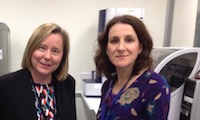
| Prof Wendy Cooper |
| Royal Prince Alfred Hospital |
| Lung Cancer |
| Diagnostic |
- Prof Cooper’s team now routinely screen all lung adenocarcinoma cases.
- Awarded a landmark $14.7m Frontier Health and Medical Research grant for groundbreaking lung cancer liquid biopsy trial
- Cancer mutation testing is being used to characterise tumour pathology and identify suitable and personalised drugs for patients
- Approval of new therapies and concurrent diagnostics by PBAC and MSAC
- New clinical trials in association with pharmaceutical companies are being undertaken.
- in 2017, Prof Cooper was awarded the John Raftos Medal for her innovative research and its application.

| Prof Michael Good AO |
| Griffith University |
| Rheumatic Heart Disease and Streptococcus A infections |
| Vaccine |
Key outcomes:
- Development collaboration with major pharmaceutical company and anticipated commercialisation through Australian NewCo establishment in 2023/2024
- Currently in Phase 1 clinical trial overseas
- Investment from industry
- Leveraged $3.5m from the Heart Foundation
- Leveraged over $750,000 of funding from external sources including Lowitja, Snow Foundation etc.
- $550,000 in funding and over $500,000 in kind to fund a Phase 1 clinical trial from the Li Ka Shing Institute (Canada)
“NFMRI funding for our streptococcal vaccine project has provided critical leverage to enable us to secure funds for the clinical aspects of our Phase I trial, which would not have been possible without the ability to produce GMP-grade vaccine and to undertake formal toxicology studies on the vaccine. If the vaccine is successful, then much credit will be owing to NFMRI and their willingness to help us through this important phase in vaccine development”

| Prof Janet Davies |
| Queensland University of Technology |
| Grass Allergies and Asthma |
| Vaccine and Diagnostic |
Key highlights:
- Attracted co-sponsorship from potential industry partner, Abionic Switzerland to test the utility of allergens of subtropic Bahia and Bermuda grass pollen to function as an active ingredient in a nanotechnology point-0f-care diagnostic platform
- Research collaborations with ThermoFisher Scientific Sweden, Abionic Switzerland and Stallergenes Greer, France, Sullivan Nicolaides Pathology and Abacus dx
- Dr Davies was promoted to Associate Professor and then Professor
- Recombinant allergens have been optimised and verified by Abionic
- Newly designed, expressed and purified allergen components successfully assessed for quality by mass spectrometry by APAF
“I am and will remain grateful for having received the financial support from the Foundation and for the opportunities the grant afforded me. Perhaps beyond the tangible, the greatest benefit may well be the learning and growth in knowledge and experience in the commercial side of translation that this project has provided.”

| Prof Lenka Munoz |
| University of Sydney |
| Brain Cancer |
| Therapeutic |
Key outcomes:
- The innovation has been licensed to an industry partner.
- Has since attracted more than $7.5M in research funding has been directed towards Prof. Munoz’ lab.
- Since receiving this grant, Lenka has secured tenure and been promoted to Professor.
- Was awarded a $550k development grant (NHMRC) in 2018 for preclinical development of the 2nd generation drug candidates.
- Lin BioScience funding grant, $1,200,000
- NHMRC Ideas grant, $1,100,000
- Substancial IP and out-licensing portfolio of near-oncology therapeutics she developed.
“The funding received from the Foundation came at the right time. We discovered an interesting drug molecule which effectively killed brain cancer cells, without causing toxicity to healthy cells. With the NFMRI funding we were able to delineate its mechanism of action and generate intellectual property, which was recently licensed to an industry partner. We are currently progressing our molecule towards clinical trials, hoping that soon we will be able to offer patients with fatal brain tumours an effective treatment. All this would not be possible without the generous funding received from NFMRI.”

| Prof Bernard Flynn |
| Monash University |
| Inflammatory bowel disease |
| Drug |
Key outcomes:
- Term sheet for a VC-backed seed funding start-up company, $2.5m
- Monash Research Innovation Fund, $50,000
- Monash MIPS incubator investment, $50,000
“After being awarded the Dr. John Raftos AM Medal by NFMRI, Prof Flynn applied the $50,000 prize towards research investigating a potential treatment for inflammatory bowel disease. Despite receiving the funding in 2021, substantial progress is already taking place”

| A/Prof Branka Grubor Bauk |
| The University of Adelaide |
| Zika virus |
| Vaccine |
Key achievements to date:
- Industry collaboration with Vaxxas (Australia)
- Industry support from aVaxzipen (UK)
- Industry collaboration with PharmaJet (CO, USA)
- Collaboration with University of Wisconsin – Madison (WI, USA)
A/Prof Grubor-Bauk has developed an innovative, patented and thermally stable Zika virus DNA vaccine that encodes Zika virus non-structural protein 1, NS1. Extensive evaluation of this vaccine in mouse models of Zika infection has shown that it induces strong immunity and confers complete protection against systemic Zika infection. Funding from NFMRI is helping to progress the development a novel Zika virus vaccine by completing pre-clinical evaluation of this Zika virus DNA vaccine enabling Phase I Human Clinical Trials, and generating data for regulatory filing.

